
 Products

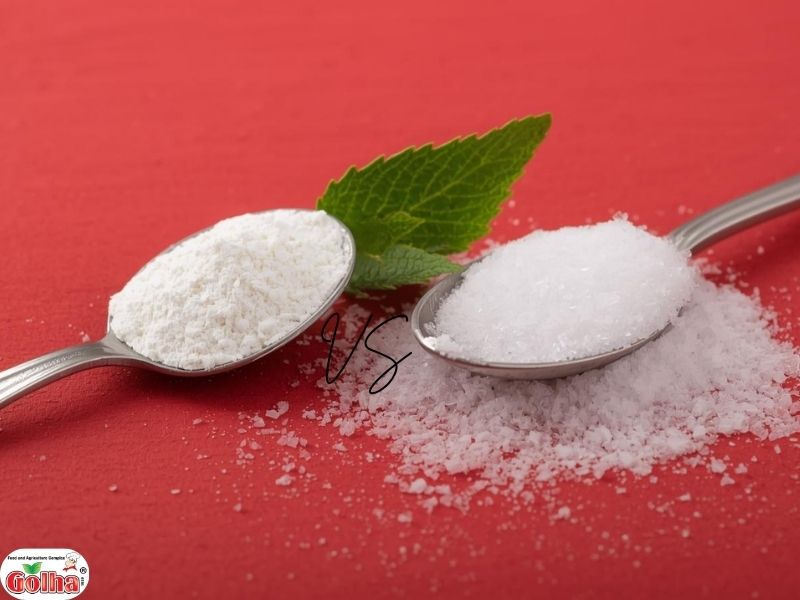
The differences between baking powder and baking soda is one of the important things that everyone should know. Baking and pastry making is an art where chemical reactions play a central role. Two common white powders primarily responsible for leavening and puffing up cakes, cookies, and breads are baking soda and baking powder. Although both look similar and are used to create volume, they have key and important differences in their chemical composition, mechanism of action, and application in recipes. Understanding these differences is essential for achieving the best results in your baking.
Baking powder vs Baking soda
Baking soda is a pure alkaline substance that is activated only in the presence of an acidic ingredient and moisture (such as vinegar, yogurt, or buttermilk), quickly producing carbon dioxide gas. This is why products containing it must be baked quickly. In contrast, baking powder is a complete and composite leavening agent that already contains baking soda, a dry acidic salt (like cream of tartar), and usually cornstarch. This composite activates on its own, without the need for additional acid, first with moisture and then with heat (a double-acting mechanism), making it suitable for recipes that don’t contain acid or require a longer baking time.
- Difference in Chemical Composition and Nature
The main difference between these two substances lies in their chemical structure and ingredients:
| Feature | Baking Soda | Baking Powder |
|---|---|---|
| Chemical Name | Sodium Bicarbonate (NaHCO3) | A combination of baking soda, one or more dry acidic salts, and cornstarch |
| Chemical Nature | Alkaline or Basic | Neutral or Slightly Acidic |
| Active Components | Only one base (alkali) | Both a base (baking soda) and an acid |
| Need for Added Acid | Yes, it absolutely needs an acidic ingredient (like yogurt, lemon juice, or vinegar) for activation. | No, because the acid is already present in its composition. |
- Difference in Mechanism of Action and Reaction Speed
How these two substances react in the dough is the most crucial factor in deciding their use in a recipe.
Baking Soda: Fast, Single-Stage Reaction
- Mechanism: As soon as baking soda is combined with an acidic liquid, it immediately starts its chemical reaction, releasing carbon dioxide gas (CO2).
- Speed: This reaction is very fast, and a large amount of gas is produced immediately.
- Result: Due to the rapid reaction, dough containing baking soda must be placed in the oven immediately to prevent the produced rise from dissipating.
Baking Powder: Slow, Double-Stage Reaction
- Mechanism: Most baking powders are Double-Acting.
- First Stage: A small amount of gas (CO2) is released immediately upon mixing with liquids.
- Second Stage: The remaining gas is released when exposed to the oven’s heat, causing the final lift.
Speed: This reaction is slower and more controlled.
Result: Because gas production is completed in the oven, it’s more suitable for bakes that require longer preparation times and for recipes that do not contain acidic ingredients.
- Difference in Application, Flavor, and Final Color
The choice between baking soda and baking powder significantly impacts the final outcome of the baked good:
Baking Soda Applications:
- Used in recipes with a high amount of acidic ingredients (like buttermilk pancakes, cakes containing yogurt, vinegar, or molasses).
- Due to its greater leavening power (about 3–4 times stronger than baking powder), less quantity is required.
- Flavor and Color: Overuse or insufficient acid to neutralize it can create an unpleasant soapy or bitter taste. It can also cause the final product’s color to be darker.
Baking Powder Applications:
- Used in recipes that lack acidic ingredients or have very little acid (like simple cakes, scones, and cookies).
- Flavor and Color: It has a more neutral flavor and generally does not negatively impact the final product’s flavor or color.
| Feature | Baking Soda | Baking Powder |
|---|---|---|
| Leavening Power | Very Strong (about 3–4 times stronger than baking powder) | Strong |
| Effect on Flavor | Creates a bitter or soapy taste if too much is used. | Has a neutral flavor. |
| Effect on Color | Can make the final product color slightly darker. | Usually does not change the color. |
- Difference in Shelf Life
Baking powder’s shelf life is about 9 to 12 months, after which its quality may decrease; however, baking soda has a long shelf life and can be stored for a longer period.
Summary Table
| Feature | Baking Soda (NaHCO3) | Baking Powder |
|---|---|---|
| Chemical Composition | Pure Sodium Bicarbonate (NaHCO3) | A mixture of baking soda, a dry acid (e.g., cream of tartar), and cornstarch |
| Chemical Nature | Alkaline (Basic) | Neutral or slightly acidic (due to the acid in its composition) |
| Activation Method | Only in the presence of an acidic ingredient and moisture | Activated on its own with moisture (Stage 1) and then with heat (Stage 2) |
| Reaction Speed/Type | Fast and single-stage (upon contact with acid) | Slower and double-stage (partially with liquid, main part with heat) |
| Leavening Power | Very strong (about 3–4 times stronger than baking powder) | Strong |
| Main Application | In recipes that have sufficient acid (like yogurt, buttermilk, vinegar, molasses) | In recipes that lack acid or require a longer baking time |
| Effect on Flavor | Creates a bitter or soapy taste if overused or not neutralized. | Has a neutral flavor. |
| Effect on Color | Can make the final product color slightly darker. | Usually does not change the color. |
| Quantity Used | Little | More |
| Shelf Life | Longer and indefinite (in a cool, dry place) | 9 to 12 months (quality decreases afterward) |

Can Baking Soda and Baking Powder Be Used Interchangeably?
Yes, it’s possible, but it’s not a simple swap and requires careful attention to ratios and, in some cases, the addition of other ingredients.
1. Using Baking Soda Instead of Baking Powder
If your recipe calls for baking powder but you don’t have it and want to use baking soda, you must consider two essential points:
A. Need for Added Acidic Ingredient
Baking powder contains acid in its composition, but baking soda (sodium bicarbonate) is a pure alkali and needs an acid to activate. Therefore, for substitution, you must add an acidic ingredient such as sour cream, buttermilk, or yogurt to your mixture. This is essential for chemical activation and to prevent a soapy taste.
B. Precise Ratio Adjustment
Baking soda is much stronger than baking powder. Therefore, you must use a significantly smaller amount.
- Substitution Rule: For every 1 teaspoon of baking powder called for in the recipe, you should use only 1/4 teaspoon of baking soda.
- Note: This also requires careful adjustment of the acidic ingredients in the recipe to ensure all the added baking soda is neutralized.
2. Using Baking Powder Instead of Baking Soda
If you want to use baking powder instead of baking soda, this substitution, although not widely recommended, can be done.
A. No Need for Added Ingredients
Fortunately, swapping baking powder for baking soda does not require specific conditions or added ingredients (like acid), as the baking powder already contains the necessary acid.
B. Precise Ratio Adjustment (Increasing Quantity)
Due to the difference in strength, since baking soda is stronger, you must substitute with a larger amount of baking powder to achieve the same leavening effect.
- Substitution Rule: For every 1 teaspoon of baking soda called for in the recipe, you should use about 3 teaspoons of baking powder.
- Tip: Using a large amount of baking powder might cause the final product to have a slightly chemical or bitter taste.
What is Baking Powder?
Unlike baking soda, which is a pure substance, baking powder is considered a complete and composite ingredient. This white powder is usually made up of three main components:
- Base (Alkali): Usually baking soda or sodium bicarbonate.
- Weak Acid (Dry): One or more dry acidic salts (such as cream of tartar, calcium phosphate, or sodium aluminum sulfate).
- Buffer (Moisture Absorber): Usually cornstarch or rice flour, added to prevent premature reaction between the acidic and basic components and preserve the powder’s shelf life.
How Baking Powder Works
When baking powder is mixed with liquids in the dough or batter and exposed to the oven’s heat, the chemical reaction between its acidic and alkaline components begins, producing carbon dioxide gas (CO2). This gas gets trapped in the dough, creating tiny bubbles that ultimately cause the dough to puff up, become spongy, and lighten the texture of the final product as the volume increases.
Main Applications of Baking Powder
Baking powder is a versatile ingredient widely used for products that are prepared quickly (Quick Breads) and products that do not contain acidic ingredients in their composition.
| Area | Uses | Final Product Characteristics |
|---|---|---|
| Baking | Cakes, Muffins, Scones, Biscuits | Soft, delicate, and spongy texture |
| Breakfast | Pancakes, Waffles | Puffy and light |
| Breads | Quick breads (e.g., corn bread) | Increased volume and porous texture |
| Coating | Batter coatings for fried foods | Creates a crispy and light texture |
Non-Food Uses
Due to its baking soda component, baking powder also has some household uses:
- Deodorizer: Helps eliminate unpleasant refrigerator odors.
- Cleaning: Mixed with water to clean stains and surface buildup.
- Laundry Whitener: Added to detergent to boost the brightness of clothes.

What is Baking Soda?
Baking soda is a pure alkaline substance, and its main role in all applications is its ability to react with acids or decompose upon heating, both of which result in the production of carbon dioxide gas.
Baking Soda (NaHCO3) + Acid (H+) → Salt (Na+) + Carbon Dioxide (CO2↑) + Water (H2O)
Applications of Baking Soda
The uses of baking soda are very extensive and go beyond baking:
1. Culinary Applications
- Leavening (Puffing): Its most important use is as a leavening agent in pastries and breads that contain an acidic ingredient in their composition (such as buttermilk, yogurt, honey, molasses, lemon juice, or vinegar).
- Fast Reaction: As soon as it combines with acid and moisture, it rapidly releases carbon dioxide gas, causing the dough to swell and puff up. Consequently, doughs containing baking soda must be baked immediately.
- Crisping: Used in preparing certain fried foods to create a crispier texture.
- Tenderizing Meat: Helps retain moisture and tenderize the texture of meat.
2. Health and Hygiene Applications
- Antacid: Due to its alkaline nature, baking soda is a common remedy for heartburn or acid reflux, as it neutralizes excess stomach acid (half a teaspoon in half a glass of water).
- Mouthwash and Tooth Whitener: Helps remove plaque and neutralize acids in the mouth, acting as a mild tooth whitener.
- Deodorant: Has the ability to neutralize odors and can be used as a natural body powder.
3. Cleaning and Household Applications
- Deodorizing: One of the best and cheapest natural deodorizers. A small open box of baking soda in the refrigerator or freezer can absorb unpleasant odors.
- All-Purpose Cleaner: Due to its mild crystalline structure, it can be used as a gentle abrasive to clean tough stains, grime, and grease on dishes, stovetops, and tiles.
- Laundry: Adding some baking soda to the washing machine can help clothes clean better, remove bad odors, and soften the fabric.
- Cleaning Fruits and Vegetables: Also used to wash and clean fruits and vegetables.
Method for Distinguishing Baking Powder from Baking Soda
| Test | Baking Soda | Baking Powder |
|---|---|---|
| Adding Water (Neutral Liquid) | Shows no reaction or very little foam. | Immediately begins to foam and bubble (due to the presence of acid in its composition). |
| Adding Vinegar/Lemon Juice (Acidic Liquid) | Immediately and intensely foams and bubbles. | Reacts instantly, but the reaction is usually longer and is accompanied by clouding. |
Conclusion
Generally speaking, baking soda is a pure and strong alkaline substance that absolutely requires an acidic ingredient in the recipe to activate and provide leavening. Baking powder, on the other hand, is a complete and balanced agent that already contains the necessary baking soda and acid for the reaction, and therefore only needs liquids to be activated.
If an acidic ingredient is present in the recipe, baking soda is likely sufficient, but if there is no specific acidic ingredient (such as milk or eggs), baking powder should be used.
Understanding the structural, functional, and practical differences between baking soda and baking powder allows you to operate with greater confidence and precision in the kitchen and achieve the best texture and flavor in your baked goods.
Thank you for sticking with Golha until the end of this article; we hope this content was useful to you.